Battery only in Broadstairs: retrofit or cheap-rate
A battery without new panels. Add it to solar you already have, or charge it from cheap overnight power. 0% VAT applies to a battery on its own until 31 March 2027.
Who it suits
- You already have solar and export a lot of power
- You are on a cheap overnight or time-of-use tariff
- You have an electric car or a heat pump
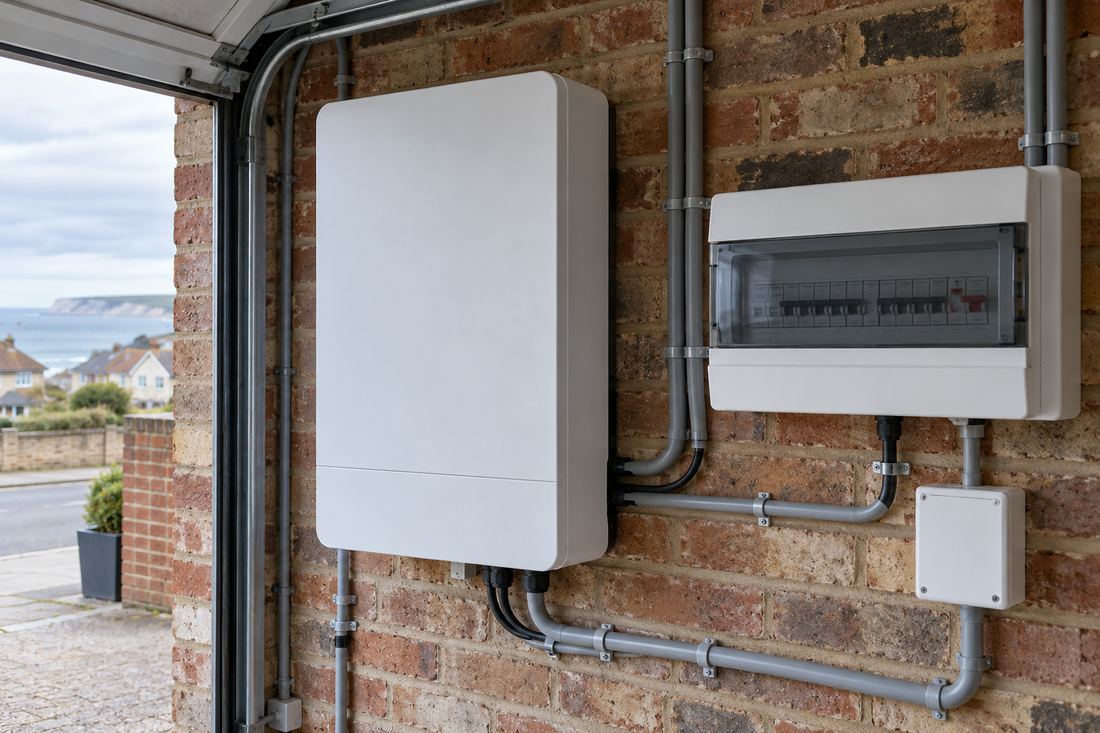
- You live in a flat or a house where a roof array is not possible, and a battery can go inside
How it works
- You tell us about your solar, your meter and your tariff.
- We check your inverter, your fuse board and where a battery can go.
- You get a written quote and a straight view on whether it pays back.
- Our MCS-certified installation partner fits it, usually in one day.
- The network operator is told, and the battery is set up to suit your tariff.
What it costs
Battery added to existing solar
5 kWh battery, existing 4 kWp solar
Large battery added to existing solar
10 kWh battery, existing 4 kWp solar
Battery added to solar, cheap overnight rate
5 kWh battery, existing 4 kWp solar
Battery only, cheap overnight rate
5 kWh battery, no solar
Large battery only, cheap overnight rate
10 kWh battery, no solar
| System | Installed price (0% VAT) | Saving and export income a year | Rough payback |
|---|---|---|---|
| Battery added to existing solar5 kWh battery, existing 4 kWp solar | £2,750 to £4,750 | £90 to £130middle estimate £110 | 25 to 43 years |
| Large battery added to existing solar10 kWh battery, existing 4 kWp solar | £5,000 to £8,750 | £180 to £270middle estimate £220 | 23 to 40 years |
| Battery added to solar, cheap overnight rate5 kWh battery, existing 4 kWp solar | £2,750 to £4,750 | £180 to £280middle estimate £230 | 12 to 21 years |
| Battery only, cheap overnight rate5 kWh battery, no solar | £2,750 to £4,750 | £180 to £270middle estimate £230 | 12 to 21 years |
| Large battery only, cheap overnight rate10 kWh battery, no solar | £5,000 to £8,750 | £230 to £350middle estimate £290 | 17 to 30 years |
Estimates, not quotes. Prices sit between the Energy Saving Trust typical cost (about £7,600 for a 4.5 kWp system, and about £4,600 for a 5 kWh battery) and our own range. Savings use a home that uses 3,000 kWh a year, electricity at 26.32p per kWh (Ofgem price cap, 1 October to 31 December 2026), 12p per kWh paid for exported power (a typical rate; see what suppliers pay) and, where shown, a 10p cheap overnight rate. Your roof, your use and your tariff change the result. See all sources and dates.
Local notes for Broadstairs
Battery on existing solar
Many homes fitted solar years ago. Older inverters may not suit a new battery. We check first so you do not pay twice.
Standalone, cheap overnight rate
A smart tariff lets you charge at night and use that power in the evening. Our estimates use an example 10p cheap rate. Check the tariff you are offered, and its exit terms.
Be realistic
A battery on its own saves less than solar does. The Energy Saving Trust says its savings will not always justify the cost on their own. We run the numbers for you before you spend anything.
0% VAT, even on its own
HMRC's VAT Notice 708/6 lists electrical battery storage among the materials covered until 31 March 2027.
A route for flats
A battery needs no roof. In a converted building you will need the freeholder's agreement to fit one. See Kingsgate and the Old Town.
Questions about this
How much does a battery cost?
As of October 2026, about £2,750 to £4,750 for 5 kWh, and £5,000 to £8,750 for 10 kWh. The Energy Saving Trust gives about £4,600 for 5 kWh and a range of £1,500 to £10,000.
How long does a battery last?
About 10 to 12 years, says the Energy Saving Trust. Ask about the warranty.
Can I fit a battery without solar?
Yes. It then only saves money if you charge it at a cheap rate and use it at a dear rate, so it needs a smart meter and a suitable tariff.
Does the battery lose power?
Yes. Using stored power is less efficient than using it straight away, says the Energy Saving Trust. We assume about 10% is lost.
Last reviewed 7 October 2026. Estimates only, not quotes. 0% VAT applies to installations until 31 March 2027, then 5%.
Get a free, no-pressure quote
Tell us your address and your last 12 months of electricity use. We reply with clear options and prices.